Wednesday, 19 March 2014

Song 2 Production


We first started by choosing which song we were going to record, what instruments we were going to use. The song we decided to do was 'Future Father' which is an original song by one of the people in my group Harry and we also asked him which instruments he wanted and he decided he wanted piano playing the main melody, a electric guitar doing some picking and vocals.
Before we started doing any recording of his song we needed to set up all the equipments such as condenser, dynamic microphones, the instruments, DI box for the guitar and bass and putting the microphone stands in the right place.

Piano - With the Titan
Condenser Microphone (Above)
We decided that the first instrument we were going to start recording was the piano and Demver was the one playing it. Even though in the original piece the starting instrument is a acoustic guitar, Harry decided he wanted a piano instead so what me and my group did first was to lift the lid of the piano to get a better quality sound of it, then we got one of the mic stand for the Titan condenser microphone and then we set up the position of the microphone facing the string on the piano.

Piano - With SM57 Dynamic
Microphone (Underneath)
After setting up the first microphone for the piano we set up another one underneath the Piano was the SM57 Dynamic Microphone, and the reason why we decided to use two is because we wanted to see which of the mic and which angle/position is better to get a good sound quality of the piano.

JamHub
After setting up all the microphones for the recording of the piano we started setting up the headphones for the people who were recording so they could hear us in the studio and we could communicate with each other.
What we did after was to get the XLR (Female), we then plugged the jack into the input of the headphones port in the JamHub and plugged the XLR (Female) into the A input. After doing that we got the headphone we were going to use for the recording and plugged them into the JamHub headphone port.


After that we got the XLR (Male) cable of the SM57 Dynamic microphone and plugged it into input one and the for the Titan condenser microphone we plugged into input two. We were making notes of every input so we knew what was what, and to save time.
SM57 microphone for the
electric guitar.
Then the next thing we started doing was to set up the Electric guitar for me. Because I was just doing picking on the guitar, the group decided to get a DI Box, plug the electric guitar into it. The input is used for the electric guitar was input number 3.
Again we decided to record in two different ways, so we added the SM57 dynamic microphone facing the body of the electric guitar so we could get natural sound of the picking of the strings. Then we plugged the dynamic microphone into input four.

After discussing what song to do, which instruments to use, who to play, what microphones to use, where they should be and plugging them all into the right input. we started the recording of the instruments. 
The first one who started recording was Demver on the piano. Because we didn't know the song really well, we asked Harry what the tempo of the song was, which was 90bpm and to sing along while Demver was playing so we knew the structure of the song and by doing that we had to pushed down the button on the mixing desk which allowed him to hear us in the other room and Harry singing.
We tried about 3-4 times before we were actually comfortable with the song and when we got the right recording of the piano.
Next thing we started recording was me playing the guitar. The process of the recording of the electric guitar was the same as the piano. Took me about 5 minutes to start recording because I didn't know the song really well and I was trying to find the right sound on the amp to fit the track. After spending few minutes working out on the chords and notes we started the recording of the guitar, but the other people in the other room where the mixing desk was they had a few problems with no hearing the microphone but the problem was on the output on Logic but after sorting it out we started the recording of the guitar and after two tries it was done.


After recording the instruments, we started setting up everything for Harry to record his vocals.
The microphones we used were the Titan condenser microphone facing directly to him and the D6 just standing on the right side of the Titan. 
The Titan condenser microphone was plugged into input five and the other microphone was plugged into input six.
We didn't take too long to record Harry's vocals because it was his song so he knew the lyrics and the structure of it, and we recorded his vocals perfectly on the first try and the song was completed.

Thursday, 13 March 2014

The Joy Of Disco

The Joy Of Disco

Disco

In the United States, Disco wasn't really accepted or taken seriously because it brought every gays,
lesbians, bisexuals and Africans together. It was not easy for these people back then when Disco came up because it was seen from the society as a mental illness. In their heads, people who liked disco weren't right in the head so they discriminated and judged them.

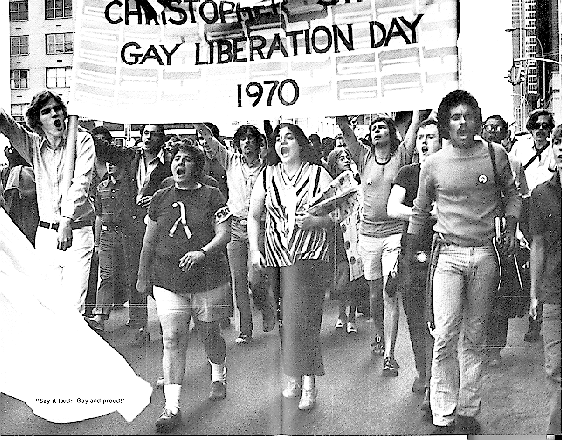
Disco came up in the 70's after the stonewall riots and Americans, Latinos, Africans and the LGBT community were the only ones back then that enjoyed Disco and they are the reason why Disco got so much fan based/popularity. Most of the underground clubs in American were all about Disco, people didn't care if the space were small. Because of its
energetic atmosphere and funky/groovy dance floor people fell in love with it and also because that was the only thing people who weren't treated equally could all relate to without worrying and enjoy themselves.
Disco music is also the reason why gay, lesbians and bisexuals have the freedom they have today, not having to worry about going to jail or not for enjoying it.


The reason why the stonewall riots happened is because homosexual people had enough of being treated like nothing, having no right to speak to defend themselves. being discriminated because they liked someone from the same sex and having to worry about going to jail or not, because if you were seen dancing with someone from the same sex would be put in jail.


the Gay community had a local underground club that was owned by Mafia who provided drugs, alcoholic drinks, and freedom for the homosexuals and black people to be who they are without worrying about people judging them.
The stonewall riots brought up Gay and Lesbians,  Transsexuals and Drag queens all in one place to fight for their freedom and equality. It happened in June 28th, 1969 in New York.


http://www.ehow.com/about_4571817_disco-facts.html
https://docs.google.com/file/d/0B8F-sfxQHEyCbjZRNHhGNVZMeU0/edit

Thursday, 27 February 2014

Elements Of a Score

Sir Duke:
A. In this section of the score there's a D quaver note with a natural sign in front of it and because this piece is in the key of B, the D note will be sharpened but because of the natural sign in front of it the player will know he/she will have to play the D note in its natural state.

B. In this section the chord is a F minor 7th chord symbol and the notes in this chord are F, Ab, C and Eb.

C. In music theory, NC stands for 'No Chord' which means the person reading the score does not play a chord in this section of the piece.

D. In music theory, D.C. al Coda stands for 'Da Capo' which in Italian means 'Beginning' and when the player sees it in the score he/she will known they need to play something from the beginning of the music until they encounter a coda then skip to the next coda sign to continue.

Is She Not Passing Fair:
A. In this section of the sections there is a 'Brace' and what it does is to connect two or more musical staves together.

B. In this section there's 'MF' which stands for Mezzo Forte which in Italian means moderately loud but because there is a  crescendo sign, the player will have to play it much louder.

C. This is a slur which means the notes will be played as gesture.

D. This is a tie and what it does it to join notes together which means they have to be played as one note.

E. In this section there's 'PED.' which means the pianist have to use the sustain pedal while playing.

F. Colla parte follows the singer or the soloist, so for example if the singer changes tempo then the player needs to change tempo too.

Wednesday, 26 February 2014

Solo Performance Evaluation 2

Solo Performance Evaluation

Before I start practising any of my chosen songs, I first organise them so I know in which order I’ll be preforming them. I looked back at some of the songs I played in my first solo performance  and picked the strong ones which were ‘Caged Bird’ and ‘I Want You Here With Me’.
The reason why I picked Caged Bird is because that is one of my original songs that I know confidently with flair and also because from my first solo performance set, that is the only song where I am playing piano and I know I would have no problems with that, the only thing I need to do was to add melody lines to it. With 'I Want You Here With Me' the reason why I picked it for my second solo performance is because that's the only song where there's a backing track and a guitar solo which is what I am doing but most of what I am playing is just me improvising on the top of the backing track.
After deciding which songs from my first solo performance I was going to pick, I added two more songs to my set list which would make up to 18-20mins.
I carefully looked at my set list of songs that I performed and during the half term we had before my final solo performance I on a new set of songs that I wanted to add to the final set list. each day I worked closely on each section of the song so I could get the best of it in time for the concert and play by memory.
Like I said before, from the first solo performance list the songs I decided to play again was Caged Bird and I Wan You Here With Me. I also added to more songs to make it up to 18-20mins and the other two songs I picked was my very own composition which I was working during the week off before the solo performance and another called 'Superhero' which is an original from a friend of mine where I did a Keytar melody line in the original song, so that is why I decided to use it for my solo set performance.

Each day I took time practising my guitar and piano solos slowly to perfect it for the solo performance and by doing that I started by going through each section of each piece where I found it hard to play or wasn't too confident about it. I took the opportunity to go to my guitar teacher and go through some of the pieces i found difficult. my guitar teacher and i have been going through some of the techniques that can really improve some of the passages i find difficult and they have been really useful for me and in general as a musician. One of the useful things that i do to ensure i play correctly in time and in rhythm, i use a metronome to help me play in time.  Also, using a tuner is one of the most important aspects of a musician and i must always be in tune whenever i play any type of genre.


Tuesday, 25 February 2014

Microphones

1)  As a general guideline, it can be said that dynamic microphones are best suited for live sound work, and that condenser microphones are more suited for use in a recording studio. What do you think? Give technical and practical reasons for why this may, or may not, be a valid statement (include diagrams if necessary). 

Dynamic Microphone

  Dynamic microphones are the most common microphones used in live sound work/live performances. They are made of a Diaphragm, a magnet and a copper wire. The dynamic microphones are good because it can handle loud sounds, and it can be used for hours, it works fine with loud sounds and the Dynamic microphones doesn't need external power for it to work but the Dynamic microphone has to be connected to a pre-amp because it has a low  output level.
The design of the dynamic microphone is really simple but it has a really strong material because if you drop it, it wont completely break into pieces. Dynamic microphones are usually cardioid or hyper cardioid which means they will only capture sounds from on specific direction.

Condenser Microphone

Condenser microphones are usually found in recording studios and different front the dynamic microphones, they are more sensitive, have a higher output level than the dynamic and have greater high frequency response giving a clear sound for the recording. Different from the dynamic microphone, the condenser microphone  requires external power (phantom power) so that's why this type of mics are usually found in recording studios, because using them in a live performance would not be a good idea.

One of the bad things about the condenser microphone is that they are not ship at all and they are fragile and can break easily so that’t why you need to be careful when setting it up and while using it. 

2)  What are the three main polar patterns found on microphones?
 Describe the differences and give examples of how each could be used (based on your own experiences if possible). 

There are three different main polar patterns found on microphones and three of them, captures the sound in different ways, and they are:

Omni - The Omni is very different from the cardoid and the Bi-Direction, and the reason why is because it captures sound from all directions, front, back and sides. One good example of this microphone being used is when there's a group of singers performing together, best known as choir because not everybody can have their one microphone to sing on it so the Omni will be the best choice, because it will pick up all the choir singers and instruments.

Uni-Directional (Cardoid) - The cardoid which has the shape of a heart can only capture sounds from on direction, so something like a vocal line because the singer only sings in one direction which will be where the mic is. They'd be found in recording studios.

Bi-Directional - The Bi-directional which has the shape of an 8 can capture sounds from both front and back of its diaphragm and captures two focused sounds with some ambiance. This polar pattern is not really used like the other two. They can be found in a recording studio or while someones having an interview, because we'd capture both voices.

3)  Dynamic and condenser microphones are the two most commonly used type of microphone found in the studio. Can you name any other types? Include their basic technical features and how, or why, they might be used. 

Shotgun Microphone - The shotgun is a different microphone and usually used in films, interview, TV stuff and video production. They are really good to capture the frequencies the human voice produces. Different from the other mics, this microphone has a different shape because it is a long, cylindrical microphone and with microphones people normal hold them with their hands but this one will be attached to a long metal pole and the person holding it will have to follow the actor/actress if it's being used in a movie or just staying still if it's in a interview, the person holding it can't be more than three feet away or the audio will sound distant and they need to hold it high above the person's head where it doesn't appear on the cameras.
With this microphone, you won't have problems capturing the sound you need if you're outside and for example it is windy, because you can still capture the sound you need and the reason why is because this mic has a special fur material which preventing the wind, rain, etc from intruding the sounds/audio you want to capture.

4)  Give suggestions as to what you might use the following microphones for and explain your answer: 


Audix D6

The Audix D6 is the most common microphone used in recording studios or live recording environments. The D6 is used to pick up the bass drum on a drum kit, it picks up a clean attack sound of the kick drum. The D6 has also a Uni-directional pick up pattern which means that the mic will only pick up a focused sound, so you need to put it in the right place so it picks up the right sound.


SE Electronics Titan

The SE Electronics Titan are the most large-diaphragm condenser microphones which are great choices if they are being used in a recording studio to record a singer or an acoustic guitar. The Titan provides a clear sounds of vocals, it doesn’t distort and it will pick up any sound, it doesn't matter if the singer sings high or low.


Microtech Gefell M300 

The Microtech Gefell M300 are the best choices for recording instruments, for example, if you use it to record an acoustic guitar and put one of the mics pointing directly at the neck of the guitar and another one pointing directly at the body of the guitar you will get the sounds effects of the guitar when is being strummed or the fingers moving up and down. The M300 can be used in recording studios and also in live performances.


5)  When using microphones, why is a mic pre-amp necessary? What features would you expect to find on a professional pre-amp (either standalone or as a part of a mixing desk)? 

A pre-amp is necessary for a microphone because it gives to it a boost, because the output of a microphone is very low and without the use of the pre-amp, the microphone can't be heard. On a pre-amp, you can add reverb, it can add tone, change the EQ and change the gain.

Wednesday, 29 January 2014

Solo Performance Recording

Solo Performance Recording

Stage Box
The first thing I did before the recording was to set up the stage for the performer. To start off I asked the person who was going to perform what she would like to have on stage for her performance. The only things she asked for was a microphone  for herself and the one we used was 'Shure SM58' and also a piano for the accompanist of one of her songs because the other songs were A Capella and a backing track.

After asking the performer what she was going to need, I picked up a jack lead plug for the microphone so I could plug it into the stage box so I could send signal/sound to the mixing desk and record it onto Logic Pro. I made notes on my phone so I could remember which input the mic was in which was in input 1 on the stage box.

Mixing Desk
After completing all the setting up of the stage for the performer I went where the mixing desk and the laptop were and opened Logic pro, created a new file, add four new audio tracks then I saved the new project I was doing so the audio files being recorded would have somewhere to be saved to then I named each of the audio track so I could know which one was what and started setting up the channels for each of them, the vocals were on channel 1, the piano was on channel 9 and the backing track were on channel 15 & 16 and then set up the inputs for all of them.

After setting up all the channels & inputs for the instruments and backing track I pressed the 'Mute' button of the 4 channels being used so I could hear the instruments and vocals, I then turned up the 'Gain' button on the mixing desk to 60db but only for the vocals and the piano because it wasn't sending any sound to the mixing desk and while using the 'Line level channels' to turn up the volume of the instruments and vocals I looked at the meter to make sure both of them was reaching to '0'.
After that I used a stereo plug cable and plugged it into the headphone socket of the performer's phone so we could use the backing track for her performance, I then turned the the 'Line level channel' for the backing track to make sure we could hear it and also to make sure logic was receiving it.

After checking if everything was working perfectly which was, I pressed the 'R' button of each audio track so I could record them, I then asked the performer to sing one of her songs for few minutes so I could just check if Logic Pro was receiving all the sounds and if it was recording properly with enough volume sound and everything was fine. 

Thursday, 16 January 2014

Techlog

Roland Gaia SH01 (Synth)

How have you been using it ?

  • By pressing different keys you get a variety of different sounds and also effects.
  • I've been messing around with the effects you can get from it, such as reverb, distortion, phaser, pitch shifter, delay with panning and tempo sync etc.
  • Even though it has less keys than the other synth, with the Gaia you can change octaves with the octave key, you can transpose, you can change the pitch.

What are the limitations ?
With the Gaia you can't record or save sounds in it and different from the other synths, the Roland Gaia has much less keys than the other synthesisers, for example, the Roland Juno-6 or the Roland AX-Synth.

How could you use it effectively in performance ?
The Gaia can be used in any song, because even though it is a small synth it has a lot to offer, it has many songs that can be added in any part of a song and it can be used to add texture.

RC-5 (Loop Station)

How have you been using it ?
I've been using it to record different guitar parts, for example, the rhythm and then the melody. I also used it to record a bass line or even me just tapping/drumming on the guitar.

What are the limitations ?
  • With the RC-5 if you record loads of sounds then you can't go back and choose which instruments you want to delete or re-record, you can only delete the previous sound.
  • With this loop station you don't have the control of the instruments, if you record guitar, bass and then you tapping on the guitar and then you want to stop one of them, then you can't because you don't have the control of the sounds you are recording.

How could you use it effectively in performance ?
The RC-5 can be very helpful if you are doing a solo performance, for example, if you are guitarist and you are doing a solo performance, in the beginning you can just start by strumming the guitar, then adding a bass line to your song if you want, then do some tapping on the guitar body and then just adding a melody line on top of it. Any other instruments can use it for the same thing,